THE CCG REPORT AS TESTAMENT TO OCCUPATION AND RESISTANCE
THE CCG REPORT AS TESTAMENT TO OCCUPATION AND RESISTANCE

A Review
The report, emerging from the Concerned Citizens’ Group’s eleventh fact-finding mission, is not merely a document—it is a rare confession from within the Indian establishment itself, validating what we have been screaming from the streets of Srinagar to the corridors of the UN Human Rights Council. For once, voices of conscience from within India have breached the wall of silence to bear witness to the lived reality of our people under a brutal military occupation masquerading as “democratic normalcy.” The Colonial Reality Beneath the “Democracy” Facade The report’s central revelation—that J&K exists under a “colonial-type diarchy”—is a damning indictment that we activists have long articulated.
Omar Abdullah’s self-description as a “half CM” is not a political inconvenience; it is evidence of a systematic design to reduce elected representatives to puppets while real power remains with the Lieutenant Governor, a direct representative of the colonial power structure. This is not governance—it is occupation administration. The parallel drawn to the British repressive measures of 1919-1920 is accurate but insufficient: what we witness today is a 21st-century settler-colonial project, complete with demographic engineering through the weaponization of reservation policies and land
laws.
The report touches on but does not fully expose the gravity of the reservations time-bomb for what it truly is: a calculated strategy to disenfranchise the Kashmiri Muslim majority. When 70% of the population competes for less than 40% of opportunities, this is not affirmative action—this is structural violence.
The data revealing that Jammu received 99% of SC and 87% of ST certificates is smoking gun evidence of a policy designed to privilege one region over another, to create a loyal constituency while systematically marginalizing the indigenous population. As activists, we see this as demographic warfare, a violation of the Fourth Geneva Convention’s prohibition against an occupying power altering the legal status of the occupied territory.
The Silencing of Truth: Media as First Casualty
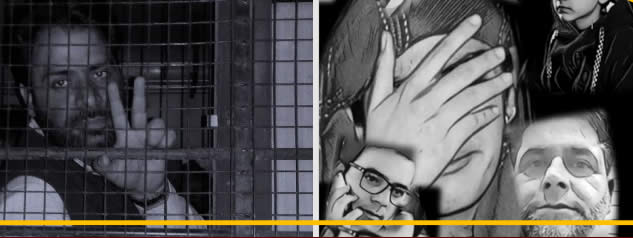
The section on media repression confirms our documented cases of how the Indian state maintains its narrative control. The requirement for journalists to submit salary slips and Nikah Namas for scrutiny is not bureaucratic oversight—it is intimidation, pure and simple. When the head of the Directorate of Information sits in the Raj Bhavan, journalism becomes state propaganda. The case of Irfan Mehraj, languishing in Rohini Jail for over 100 days with bail hearings endlessly reset, is emblematic of how the state punishes truth-tellers. This is not about “OGWs” (Over Ground Workers)—a term used to criminalize anyone who questions the occupation. This is about creating a climate of terror where journalism becomes an act of sedition.
Economic Warfare as Collective Punishment
The report’s documentation of post-Pahalgam economic devastation reveals what we call collective punishment. When 4,000 trucks of apples rot on highways while the state fails to provide basic infrastructure, when hotel leases are auctioned to outsiders while local owners who built these businesses are denied renewal rights, this is economic strangulation. The launching of goods trains that bypass Jammu’s transport sector is not development—it is the deliberate creation of new economic dependencies that sever local communities from their livelihoods.The ₹2,000 crore loss to orchardists is not mere “havoc” from natural calamities; it is the predictable outcome of a state that invests in military infrastructure over civilian needs, in occupation over development.
The Volcano of Resistance
Most significantly, the report captures what occupation forces fear most: the “volcano of suppressed anger” among youth. The state’s own actions—mass incarcerations since 2019, including political leaders, students, and even children; the surveillance of Mirwaiz Umar Farooq to the point of demanding his Friday sermon scripts; the criminalization of dissent—are manufacturing the very “radicalization” it claims to fight. When a prominent doctor warns that “all it needs is a trigger,” they are describing not pathology but the inevitable response to systematic dehumanization.
We activists reject the term “radicalization” as imperialist propaganda. What the report describes is political awakening. Youth turning away from drugs (a symptom of hopelessness) toward organized resistance is the natural trajectory of any colonized people. The boycott of Sonu Nigam’s concert was not cultural intolerance—it was a political statement against cultural invasion, against a state that sponsors performers who denigrate the Azan while
silencing our own artists.
The Betrayal of Promises and International Obligations The report correctly identifies the Supreme Court’s role in legitimizing this occupation. When the Court refuses to adjudicate the unconstitutional demotion of a state into Union Territories based on mere “assurances” from the Solicitor General, it abandons its constitutional duty. Justice Khanna’s note that this demotion is “unconstitutional” remains a dead letter because the judiciary has been captured by the executive. This is not surprising to us—occupation systems cannot be reformed from within. The repeated promises of statehood restoration by the Prime Minister and Home Minister were never made in good faith. They were tactical delays to pacify international opinion while the J&K Reorganisation Act (2019) accomplished its real purpose: creating the legal architecture for permanent control. Now that elections have produced a non-BJP government, the Centre’s refusal to restore statehood exposes its true face: democracy is acceptable only when it produces the desired outcome.
What the Report Fails to Say
While valuable, the report suffers from the limitations of its “bridge-building” mandate. It frames the crisis as a failure of Indian democracy rather than as the inevitable outcome of India’s denial of the right to self-determination—a right guaranteed by multiple UN Security Council resolutions. It documents symptoms but hesitates to name the disease: settler colonialism.
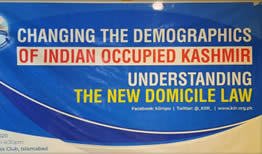
The report mentions “anti-India sentiment” spreading as if this were a problem to be solved. For us, this sentiment is legitimate anti-colonial consciousness. It describes Mehbooba Mufti’s PIL for prisoners as a political tactic, whereas we see it as a desperate attempt to save lives in a system where 5,000+ Kashmiris languish in prisons across India, many under draconian UAPA charges, effectively prisoners of conscience. The report does not adequately address the demographic threat posed by new domicile rules, the potential for non-Kashmiris to buy land and vote, the settlement of retired soldiers in the region—policies that echo Israel’s settlement project. It documents the “Darbar Move” as a bridge between regions without acknowledging how it disrupts Kashmiri administrative continuity and privileges Jammu’s Hindu-majority areas.
A Call to Action: From Documentation to Resistance
As activists operating nationally and internationally, we see this report as a weapon in our arsenal. It provides the credibility of establishment insiders to our claims at the UN Human Rights Council, the OIC, and global solidarity movements. But documentation without action is complicity.
we must use this report to:
• Challenge the Supreme Court to fulfill its promise and strike down the UT status
• Build solidarity across Indian civil society, particularly with marginalized communities who understand state repression
• Expose the farce of “democracy” in J&K to Indian citizens whose tax money funds this occupation
• Demand the immediate release of all political prisoners and journalists Internationally, this report must be:
• Submitted as official documentation to UN Special Rapporteurs on human rights
• Used to petition the International Criminal Court for investigation into crimes against humanity
• Leveraged to impose targeted sanctions on Indian officials responsible for systematic rights violations
• Presented to the UN Security Council to demand implementation of resolutions on Kashmir
• Shared with global human rights organizations to intensify the boycott, divestment, and sanctions movement
The Path Forward
The CCG report confirms that the “eerie silence” in Kashmir is not peace—it is the silence of a people buried under occupation, waiting to exhale. As activists, we do not fear this silence breaking; we work toward it. The “something big” that political leaders sense is not just potential violence—it is the inevitable eruption of a people demanding their inalienable right to determine their own future. The false binary between “dialogue” and “resistance.” True dialogue can only happen between equals, not between occupier and occupied. The Mirwaiz’s willingness to talk is noble but futile under current power asymmetries. What is needed is international intervention under the Responsibility to Protect framework, not more Indian-led processes.
This report must be the last nail in the coffin of the argument that India’s “democratic institutions” can resolve the Kashmir issue. The CCG members, despite their good intentions, remain citizens of the occupying power. Their report is a valuable insider’s account, but it is not a substitute for Kashmiri voices, for the UN-mandated plebiscite, for Azadi. We call on solidarity movements worldwide to treat this report not as an analysis but as a call to arms. The people of Jammu and Kashmir have not surrendered; they have been silenced. Our job as activists is to amplify their silence until it becomes deafening to the conscience of the world. In Solidarity, For the people of Indian occupied Jammu and Kashmir, for the disappeared, for the imprisoned, for the youth whose future is held hostage, by Indian state
Related Reports