Human Rights Report


INTRODUCTION
The Human Rights Report on Indian Illegally Occupied Jammu and Kashmir (IIoJK), May–July 2026, documents the continued erosion of civil, political, economic, social and environmental rights under intensified state control. During the reporting period, arbitrary arrests and detentions, termination of government employees, restrictions on freedom of expression and religion, repression of journalists, digital surveillance, land confiscation, economic dispossession, movement restrictions and environmental degradation remained major concerns.
The report also examines the growing militarization of civilian spaces and its impact on ordinary Kashmiris, whose homes, livelihoods, businesses, orchards, religious institutions and access to information remain increasingly vulnerable to administrative and security measures.
A significant development during the period was the record deployment of 670 companies of Central Armed Police Forces (CAPFs) for the Amarnath Yatra, described by Indian officials as the largest-ever deployment for the pilgrimage. More than 350,000 pilgrims had registered by May 2026. The deployment covered the Lakhanpur–Amarnath route, Baltal, Pahalgam, Nunwan, Yatri Niwas Jammu, Udhampur, Katra, Reasi, Banihal and Qazigund, further intensifying security controls across civilian spaces. Environmental experts also warned that the concentration of hundreds of thousands of pilgrims alongside extensive security infrastructure could aggravate pressure on glaciers, forests and water resources in the ecologically fragile Himalayan region.
The reporting period also brought renewed attention to the long-term consequences of pellet-gun use in IIoJK. An Al Jazeera report in July 2026 highlighted the continuing suffering of survivors after the controversy surrounding the Bollywood film Chauhaan. Pellet guns, introduced in Kashmir in 2010, were extensively used during the 2016 unrest. Rights groups estimate that more than 1,000 Kashmiris suffered partial or complete loss of vision, while around 14% of pellet victims were children under 15. The case of 14-year-old Insha Mushtaq, along with survivors such as Feroz Aslam of Sopore and Masroor Khalid, illustrates the lasting physical and psychological consequences of the injuries. The controversy also raised concerns over the cultural normalization and representation of state violence against Kashmiris.
Digital freedoms came under further pressure with the establishment of the Jammu and Kashmir Cyber Crime Coordination Centre (JK4C) in July. Placed under the Director General of Police and coordinated with India’s I4C, the new mechanism consolidated 2 Zonal Cyber Crime Investigation Centres of Excellence and 23 District Cyber Police Stations under a centralized structure. Its establishment adds an institutional dimension to the existing system of online monitoring, prosecutions, censorship and surveillance, raising concerns over the criminalization of digital expression and the shrinking space for independent journalism, political dissent and public criticism.
The developments documented between May and July 2026 indicate that restrictions in IIOJK are not confined to physical security measures. They increasingly encompass movement, livelihood, environmental resources, journalism, cultural narratives and digital expression. This report examines these developments through documented incidents, figures and testimonies to assess their implications for the fundamental rights and freedoms of the people of IIoJK.

ENFORCED DISAPPEARANCES IN IOJK: DECADES OF WAITING WITHOUT JUSTICE
IIoJK has witnessed enforced disappearances for decades. Yet the Indian state increasingly presents this grave human rights crisis through the softer and less accountable term of “missing persons.” This terminology cannot conceal the central question: when thousands of people disappear in one of the world’s most heavily militarized territories, should these cases simply be treated as ordinary disappearances, or investigated as possible enforced disappearances?
IIOJK remains under an extraordinary security apparatus. Indian troops, paramilitary forces, police, intelligence agencies, checkpoints and surveillance mechanisms exercise extensive control over the territory. In such an environment, the state cannot distance itself from the disappearance of thousands of people. If Indian forces directly detain individuals and conceal their fate or whereabouts, the crime is enforced disappearance. If criminal or trafficking networks repeatedly operate and make people disappear despite pervasive state control, the authorities must still explain how such networks function and why they remain unaccountable. State responsibility cannot simply end by registering an FIR and describing the victim as “missing”.
India’s own parliamentary data demonstrates the alarming scale of the problem. In 2020, 5,824 people were reported missing, followed by 6,486 in 2021, 6,983 in 2022 and 7,151 in 2023. In 2023 alone, only 2,961 persons were traced, leaving 4,190 untraced. Children have
also disappeared in large numbers: 627 in 2020, 723 in 2021 and 821 in 2022. Of the 821 children reported missing in 2022, only 376 were traced, while 445 remained unaccounted for. Parliamentary figures have further reportedly recorded 9,765 missing females since 2019, including 1,148 girls below the age of 18.
Recent incidents show that the crisis is continuing. In June 2026, three minor girls disappeared from Islamabad district. The body of Tanveer Ahmad Najar, reported missing in Ramban on June 22, was recovered the following day. Since August 1, three teenagers, Aqib Ali Danish, 19, Sameer Ahmed, 17 and Saib Arfat, 16, have remained missing.
Kashmir’s history makes these figures even more disturbing. Families have repeatedly alleged that their relatives were taken by Indian forces and never returned, while years of arbitrary detention and custodial violence have deepened the fear surrounding every new disappearance. A state cannot militarize an entire territory, claim complete security control and then disclaim responsibility when thousands vanish within that territory.
Every case must therefore be investigated not merely as a “missing-person” case but, where evidence indicates state involvement, authorization, support or acquiescence, as a possible enforced disappearance. Until the fate of every victim is established and those responsible are held accountable, the term “missing” will remain an inadequate description of a continuing crime.
KILLINGS
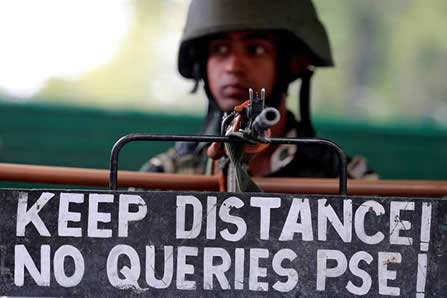
Extrajudicial killings remained a serious human rights concern in IIoJK during the reporting period. Between 7 May and 17 July 2026, at least five civilians were killed in incidents involving Indian forces, their operations, military infrastructure or the wider consequences of militarization.
These killings occurred in different circumstances, including search and cordon operations, firing by security personnel, military vehicle movement and the detonation of unexploded ordnance. The cases demonstrate the continuing vulnerability of civilians in a heavily militarized territory, where security operations frequently expose the population to lethal force and where accountability for civilian deaths remains inadequate.
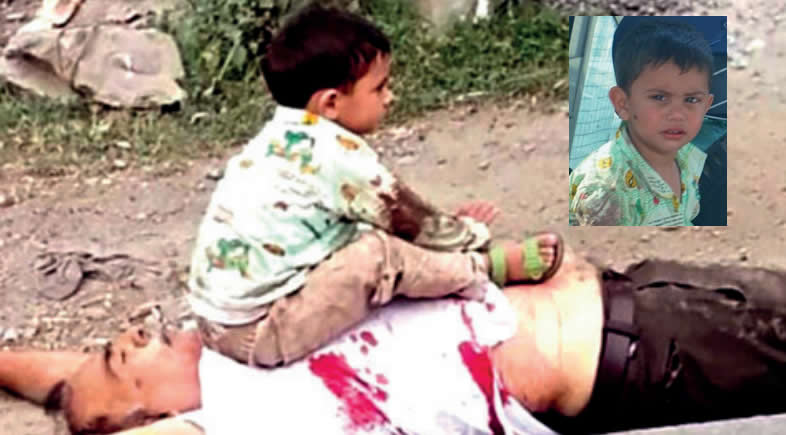
On 7 May, toddler Mohammad Zain was killed after an Indian Army vehicle struck him at Gund Brath in Sopore, Baramulla. On 12 May, a youth was killed by Indian forces during a cordon-and-search operation in the Krishna Ghati sector of Poonch district. The identity of the victim and the precise circumstances surrounding the killing remained publicly unresolved.
The consequences of militarization also continued beyond direct firing. On 27 June, civilian Zubair Ahmad Bajjad was killed when an unexploded shell detonated in the Uri sector of Baramulla. The presence of unexploded ordnance in civilian areas remains a continuing threat and raises questions about the protection of civilian life and the responsibility of the authorities to clear hazardous remnants.
Security operations again resulted in civilian deaths in July. On 8 July, Zakir Ganie was killed by Indian forces during a prolonged search operation at Chanapora in Shopian. On 17 July, Arif Hussain was shot by Special Operations Group personnel during a cordon-and-search operation in the Jaie-Gandoh/Bhaderwah area of Doda. The operation was reportedly accompanied by indiscriminate firing, restrictions on local movement and an internet suspension.
The recurrence of such incidents demonstrates the need for independent, impartial and transparent investigations into every civilian killing
involving occupation forces or military operations. The continued use of lethal force, combined with restrictions on communication and the absence of credible public accountability, reinforces concerns regarding extrajudicial killings and the protection of the right to life in IIoJK.

ARBITRARY DETENTIONS
Arbitrary detention remained a central instrument of repression in IIoJK during May–July 2026. The legal framework itself enables prolonged restrictions on liberty through laws such as the Unlawful Activities (Prevention) Act (UAPA) and the Public Safety Act (PSA), while the continued security presence and extensive powers available to authorities create an environment in which detention can occur with limited safeguards. The use of such laws against political figures, journalists, activists and ordinary residents raises serious concerns about due process, freedom of expression and the right to liberty.
The UAPA is particularly significant because its stringent bail provisions can keep an accused person in custody for prolonged periods before a case is finally adjudicated. Section 43D(5) places substantial restrictions on bail where the court considers the prosecution’s allegations prima facie credible. The PSA, meanwhile, permits preventive detention without a conventional criminal conviction. In a conflict-affected territory where security laws are extensively applied, these mechanisms can transform detention from an exceptional measure into a recurring feature of civilian life. AFSPA further reinforces the security framework by granting special powers to armed forces in designated areas, contributing to an environment where accountability for security actions remains a persistent concern.
The pattern recorded during May–July 2026 demonstrates the breadth of detention practices. Individual arrests were reported at checkpoints, during cordon-and-search operations, through house raids and following preventive-detention orders. By 23 July, the scale expanded dramatically, with reports of approximately 3,000 young people detained across multiple districts, including around 700 in Srinagar.

Additional reported figure: Approximately 3,000 youth were detained across multiple districts on 23 July 2026. This aggregate figure is presented separately because it overlaps with individually documented cases
The arrests also affected prominent Kashmiri political and civil-society figures. Mirwaiz Umar Farooq faced renewed restrictions at his Srinagar residence on 26 May and again on 29 June. Such restrictions illustrate how liberty can be curtailed even without a conventional arrest, particularly for individuals whose public activities carry political significance.
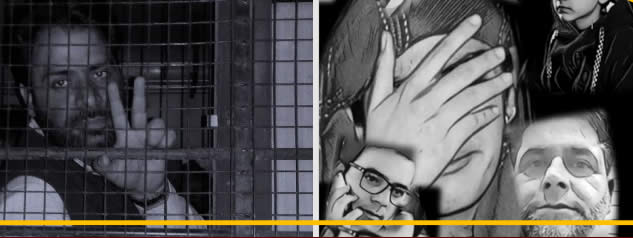
The cases of Khurram Parvez and Irfan Mehraj further demonstrate the consequences of prolonged UAPA proceedings. Parvez, a Kashmiri human rights defender, was arrested in November 2021 and remained in custody for nearly five years. Mehraj, a Kashmiri journalist and researcher, was arrested in March 2023. Both were accused in an NIA case registered in 2020 under the UAPA. On 18 July 2026, a Delhi trial court granted them bail and the Delhi High Court declined to stay their release on 21 July, although it imposed additional conditions. They were subsequently released on 22 July.
Their cases highlight a broader concern: when years of imprisonment precede the final determination of guilt, the process itself can become punitive. Parvez’s case is particularly significant because he spent years documenting human rights violations and advocating for victims and their families. The continued use of stringent counterterrorism legislation against rights defenders and journalists raises questions about whether security laws are being applied proportionately and whether legitimate civic activity is being criminalised.
Arbitrary detention is therefore not simply a question of individual arrests. It concerns the broader system through which exceptional security laws, preventive detention, prolonged pre-trial custody and restrictions on movement can suppress political participation and civic space. The May–July 2026 record demonstrates the need for independent scrutiny of every detention, prompt judicial review, access to legal counsel and full disclosure of the grounds for detention. Security cannot become a justification for indefinite deprivation of liberty and allegations cannot substitute for due process.

PROPERTY ATTACHMENT AND CONFISCATION
The attachment and seizure of civilian property emerged as an increasingly visible instrument of repression in IIOJK during May–July 2026. Indian authorities used proceedings under laws including the UAPA, NDPS Act and other security-related legislation to attach houses, land, shops and other assets. While authorities described these actions as legal measures against alleged unlawful or narcotics-related activities, the scale and frequency of attachments raise serious concerns about the use of property confiscation as a form of collective punishment and economic coercion.
A disturbing feature of many cases is that properties were attached on the basis of allegations and ongoing proceedings, while complete details regarding FIRs, evidence, valuations and final judicial convictions were often not publicly available. In several cases, the affected persons were described as accused rather than convicted. This raises a fundamental due-process concern: can the state deprive individuals and families of homes and livelihoods merely on the basis of allegations before guilt has been established through a fair trial?
The impact extends far beyond the individual named in a case. When a residential house, family land or commercial property is attached, the consequences are borne by entire families, including women, children and elderly relatives who may have no connection with the allegations. Property attachment can therefore become a powerful means of punishment without imprisonment, creating economic insecurity and placing communities under constant fear of losing their homes and livelihoods.
During the reporting period, authorities carried out a sustained series of attachments across Srinagar, Anantnag, Baramulla, Kishtwar, Udhampur, Budgam, Pulwama, Shopian, Ramban and Reasi. Numerous residential houses, shops and large tracts of land were affected. Based on cases for which values were disclosed, properties worth at least several crores of rupees were attached during the three-month period. This figure remains conservative because the value of numerous attached properties was not publicly disclosed.
The pattern also reveals a shift towards using economic pressure as an extension of the wider system of repression. The attachment of property, particularly under exceptional security

ORDON AND SEARCH OPERATIONS (CASOS)
Indian occupation forces conducted repeated cordon-and-search operations (CASOs), house-to-house searches, village cordons and area-domination exercises across Poonch, Kulgam, Rajouri, Baramulla, Kishtwar, Jammu, Shopian, Samba, Pulwama, Anantnag, Srinagar and Budgam during May–July 2026. The frequency and geographical spread of these operations indicate a sustained pattern of intensive security control over civilian areas.
The operations have had consequences beyond the stated security objectives. Residents have faced restrictions on movement, prolonged confinement inside homes, road closures, searches of private residences and disruption of daily economic and social activities. In several instances, security personnel reportedly searched large residential areas and questioned or detained residents. The use of drones, helicopters, para-commandos and large contingents of military and paramilitary personnel in prolonged operations further demonstrates the scale of the security apparatus deployed across civilian spaces.
The duration of some operations is particularly concerning. The operation launched in Rajouri on 23 May continued for at least 53 days, involving repeated searches and extensive security deployments. Similarly, the Shopian operation launched on 4 July continued for at least 11 days, while other operations were repeatedly extended or conducted across adjoining villages.
The impact on civilians was also documented through arrests, injuries and alleged property damage. On 21 June, a search of more than 200 jhuggies in Jammu resulted in nine arrests. During the 18 July operation in Pulwama, at least six women were reportedly injured, while property damage and loss of valuables were alleged. The territory-wide searches of 23–24 July reportedly resulted in approximately 3,500 arrests, although district-wise figures were not publicly disclosed.
The repeated use of such operations raises serious concerns regarding freedom of movement, privacy, due process and protection from arbitrary detention. When residential areas and entire villages are subjected to prolonged searches and restrictions, the distinction between targeted security measures and collective restrictions on civilian populations becomes increasingly difficult to ignore.
The pattern during May–July 2026 therefore warrants systematic documentation and independent scrutiny. Every operation should be subject to clear legal safeguards, proportionality requirements and transparent accountability mechanisms, particularly where civilians are injured, detained, displaced or otherwise affected.


ENVIRONMENTAL DEGRADATION AND CLIMATE VULNERABILITY
IIoJK is facing a deepening environmental crisis driven by climate change, deforestation, infrastructure expansion, militarization, unchecked tourism and weak environmental governance. The crisis is particularly alarming because Kashmir’s fragile mountain ecosystem is being placed under growing pressure while the capacity of local communities to monitor, challenge and respond to environmental damage remains severely constrained.
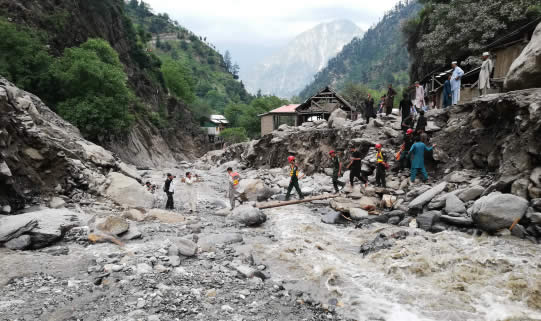
The rapid retreat of glaciers is among the clearest indicators of this crisis. The Kolahoi Glacier, a major source of the Lidder River, has lost more than 50 percent of its surface area since the 1960s. The Thajiwas Glacier in Sonamarg has reportedly lost nearly 88 percent of its ice volume, while broader studies suggest that Kashmir has lost approximately 25 to 30 percent of its glaciers over the past six decades. Rising temperatures, declining snowfall and erratic weather are disrupting the natural system that sustains the Jhelum, Lidder and Chenab rivers. The immediate result can be excessive melt and flooding; the long-term consequence is reduced summer water availability for agriculture, households and ecosystems.
This threat is already extending to human settlements. Official figures released in July 2026 identified 1,017 flood-prone and vulnerable locations across IIOJK, placing more than one million people at risk. In the Kashmir Valley alone, 654 vulnerable villages with approximately 722,000 people were identified. A further 363 vulnerable locations were recorded across ten districts of the Jammu region. Yet, twelve years after the devastating 2014 floods, a comprehensive long-term flood management strategy remains unimplemented. Recommendations for detention basins, modifications to the flood spill channel and widening of the outfall channel have remained largely confined to official studies.
Deforestation and the diversion of forest land are compounding these climate risks. Between April 2021 and October 2025, approximately 925.44 hectares of forest land were diverted for roads, railways, military infrastructure and urban expansion. As of March 2026, more than 14,359 hectares were reportedly under encroachment associated with developmental projects. Ecologically sensitive areas, including parts of the Pir Panjal range, Kupwara forests and Baramulla, are increasingly affected. Forest loss reduces water retention, destabilizes slopes and increases the risks of soil erosion and landslides.
Major infrastructure projects have further intensified pressure on the Himalayan environment. Extensive tunnelling, blasting and hill-cutting associated with the Udhampur-Srinagar-Baramulla Rail Link have affected fragile geological zones in Ramban, Reasi and Banihal. Tourism-related expansion and construction linked to the Amarnath Yatra have also placed growing pressure on alpine meadows, wetlands and water sources.
The environmental consequences of the pilgrimage were highlighted during the 2025 season, when more than 600,000 visitors reportedly generated up to four tonnes of waste daily along the Pahalgam and Baltal routes. The Lidder and Sindh river systems, which support drinking water, agriculture and biodiversity, face increasing pollution from waste and human activity. More recently, videos from Pahalgam showed pilgrims bathing with soap and shampoo and washing clothes with detergents in the Lidder River, raising serious concerns about the failure to protect one of Kashmir’s most important freshwater ecosystems.
The deterioration of forests is also reflected in the growing incidence of fires. Between April 2025 and February 2026, around 366 forest fires reportedly damaged nearly 972 hectares of forest cover. From December 2025 to February 2026 alone, 48 fires affected approximately 100 hectares. These incidents coincided with an acute precipitation deficit. The India Meteorological Department reportedly recorded a 65 percent rainfall deficit, while February experienced an 89 percent shortfall. Srinagar received only 5.3 mm of rainfall, its lowest level since 1960, while Jammu reportedly recorded zero rainfall for only the second time in more than a century.
Militarization adds another layer of ecological pressure. Large military deployments and associated camps, roads, bunkers and infrastructure affect forested and high-altitude areas, contributing to habitat fragmentation and restricting wildlife movement. Human-wildlife conflict reportedly increased by nearly 30 percent between 2022 and 2026, demonstrating how ecological disruption increasingly affects both communities and biodiversity.
The central problem is therefore not climate change alone. Climate change is interacting with environmental mismanagement, land diversion, infrastructure expansion and weak disaster preparedness. The result is a cascading crisis in which glacier retreat threatens water security, forest loss destabilizes mountains, pollution degrades rivers and inadequate planning leaves communities exposed to floods and landslides.
IIOJK requires urgent and transparent environmental action. Forest diversion and encroachment must be independently reviewed, major projects should undergo credible and publicly accessible Environmental Impact Assessments and fragile rivers and alpine ecosystems require effective protection. The long-delayed flood management measures must also be implemented before another disaster exposes the consequences of continued inaction. For Kashmir, environmental protection is no longer a secondary policy issue. It is directly connected to water security, food production, disaster survival and the future of millions of people.
INTERFERENCE IN RELIGIOUS FREEDOM AND ISLAMIC INSTITUTIONS IN IIOJK
Religious freedom and the religious character of the Muslim-majority population in IIOJK continued to face pressure during the reporting period. Actions against religious institutions, restrictions surrounding Islamic gatherings and decisions affecting the social and religious environment have raised serious concerns about interference with the community’s right to practise, preserve and express its religious identity.
On 20 May 2026, Indian police reportedly registered hundreds of FIRs against mourners, youth and members of Jamaat-e-Islami following the funeral prayers of prominent Islamic scholar Sheikh Ghulam Hassan in Kulgam on 16 May. Thousands had gathered to offer prayers and pay their final respects. The registration of criminal cases against participants demonstrates how even mourning and religious gatherings can become subject to surveillance and police action. Criminalising individuals for participation in a funeral ceremony creates fear around the exercise of basic religious and social practices.
The pressure on Islamic educational institutions was also evident on 31 May, when the National Investigation Agency conducted raids at religious and educational institutions in Srinagar and Shopian. The institutions searched included Jamia Sirajul Uloom in Shopian, another school in the Imam Sahib area and Jamia al-Bannat in Lal Bazaar, Srinagar. A residence associated with a former religious organisation leader was also raided. Such actions against madrasas and religious schools raise concerns that Islamic educational spaces are increasingly being subjected to security-based scrutiny and intimidation.
Concerns over the protection of Kashmir’s Islamic social environment also emerged in July 2026 following a reported proposal to relocate liquor outlets from the Amarnath Yatra highway into residential areas around Pantha Chowk, Srinagar. The affected localities contain homes, schools, mosques and religious institutions. Residents expressed concern that placing liquor shops in these areas disregards the religious beliefs and moral sensitivities of the predominantly Muslim population. The controversy also raised questions about selective respect for religious sentiments, particularly when alcohol outlets were reportedly considered unsuitable along the pilgrimage route but could be relocated closer to Muslim residential neighbourhoods.
Taken together, these developments indicate a broader pattern in which Islamic institutions, religious gatherings and the religious environment of Kashmiri society face increasing administrative and security interference. Raids on madrasas, criminal cases against mourners and policies affecting the religious character of residential communities have consequences beyond individual incidents. They contribute to fear and uncertainty surrounding the free practice and preservation of religious life.
The right to freedom of religion includes not only the right to worship privately but also the right to maintain religious institutions, attend religious gatherings, educate children according to religious beliefs and protect the religious character of one’s community. Any policy that subjects these spaces to disproportionate restrictions, surveillance or coercion requires serious scrutiny. Protecting religious freedom in IIOJK therefore requires an end to arbitrary interference in Islamic institutions and gatherings and meaningful respect for the religious and cultural identity of its people.
ECONOMIC STRANGULATION AND THE ASSAULT ON LIVELIHOODS IN IIOJK
The economic situation in IIoJK during the reporting period reflected a widening pattern of pressure on the livelihoods and productive resources of the Kashmiri people. The impact was visible across the horticulture, agriculture, tourism, transport and labour sectors. Restrictions on movement, eviction of orchard owners, destruction of fruit plantations, pressure on business owners and the continued insecurity of low-paid workers collectively deepened economic uncertainty. These measures affected not only individual families but also sectors that sustain thousands of households and form the foundation of Kashmir’s local economy.
Assault on Kashmir’s Agricultural and Horticultural Economy Horticulture remains one of the most important sources of livelihood in the Kashmir Valley. Apples, pears, plums and other fruits support growers, orchard workers, traders, transporters and associated businesses across districts including Shopian, Pulwama, Kulgam, Baramulla and Sopore. Yet, during July 2026, movement restrictions imposed in connection with the Amarnath Yatra directly affected the transportation of perishable produce. From July 2, strict traffic regulations restricted civilian movement on major routes, particularly the Jammu-Srinagar Highway, while the 2026 Yatra itself was scheduled from July 3 to August 28. Fruit growers reported that one-way traffic
arrangements and prolonged restrictions left trucks carrying plums, early varieties of apples and pears stranded for long periods. Because these products are highly perishable, even a single day’s delay can result in significant financial losses. The consequences extended beyond growers. Transporters, traders, market workers and families dependent on the horticulture supply chain were also affected.
The Kashmir Valley Fruit Growers-cum-Dealers Union urged the authorities to ensure uninterrupted movement of fruit-laden trucks, stressing that the harvest season could not be separated from the economic reality of timely transportation. Repeated road closures, checkpoints and traffic restrictions disrupted normal commercial activity at a time when growers were already dealing with losses caused by adverse weather and natural calamities. The restrictions therefore created a situation in which the movement of agricultural produce became subordinate to convoy arrangements, placing the burden of economic disruption on local producers.
The pressure on the horticulture sector was also reflected in actions directly affecting orchards and agricultural land. In Allowpora and adjoining areas of Shopian district, nearly 70 families faced eviction notices affecting land cultivated by their families for decades. For these households, orchards were not simply pieces of property but their principal source of income and the result of generations of labour and investment. The threat of eviction, without adequate assurances regarding rehabilitation or compensation, created fear of unemployment, poverty and economic displacement.
In Kulgam, the situation was further aggravated when around 500 high-density apple plants were cut down and uprooted in Hatipora in the Behibagh area. The destruction caused estimated losses of more than Rs 2.5 million. The orchard had been developed under a modern cultivation model intended to increase productivity and income. Its destruction therefore represented the loss of both an existing agricultural asset and years of future economic returns. At a time when horticulture supports thousands of households, the targeting or destruction of productive orchards deepens insecurity among farmers and weakens a sector central to Kashmir’s economy.
Economic Pressure on Tourism, Businesses and Workers
Economic pressure was not limited to agriculture. Tourism, another major source of local employment, also faced disruption. Gulmarg is among the most important tourism centres in the territory. Official figures show that the Gulmarg Gondola alone received more than 768,000 visitors in 2024 and generated around Rs 103 crore in revenue, demonstrating the economic importance of tourism and associated local businesses.
Yet, in June 2026, nine prominent Gulmarg hoteliers were summoned by the Enforcement Directorate and directed to furnish financial and property documents. Those affected included owners and operators associated with major hotels and tourism businesses. Such action against leading local entrepreneurs generated concern about the growing use of investigative and legal mechanisms against Kashmiri business owners.
This pressure on the tourism sector occurred alongside movement restrictions affecting visitors and commercial activity during the Amarnath Yatra. A June 30 advisory restricted tourist vehicles travelling between Gulmarg and Srinagar after 5:00 p.m. throughout the notified Yatra period. While the authorities presented these restrictions as traffic-management measures, they also affected hoteliers, transport operators, restaurants and other businesses dependent on the free movement of tourists.
The contradiction is significant: tourism is officially promoted as a major source of employment and economic growth, yet restrictions on mobility and pressure on local businesses can simultaneously undermine the sector on which thousands depend. The government’s own Economic Survey describes extensive tourism development, including 611 tourism infrastructure projects, some linked to the Amarnath Yatra, highlighting the scale of the sector’s economic importance.
The condition of low-paid workers further demonstrates the broader economic distress. On June 28, sanitation workers in Langate, Kupwara, supported by local traders, staged a peaceful protest demanding the regularisation of their services and an increase in wages. Several workers stated that they had served for years and in some cases decades, while continuing to receive only Rs 9,300 per month without the benefits and security available to regular employees.
With the rising cost of essential commodities, such wages were insufficient to meet basic household needs. The protest highlighted a deeper problem of insecure employment, where workers providing essential public services remain deprived of job security and adequate social protection.
Taken together, these developments indicate that economic hardship in IIOJK cannot be viewed as the result of a single policy or isolated incident. Restrictions on the transportation of fruit affect growers in Shopian, Pulwama, Sopore and other producing areas. Eviction notices threaten orchard-owning families in Shopian.
The destruction of more than 500 apple plants in Hatipora, Kulgam, damages productive agricultural investment. Investigative pressure on nine prominent Gulmarg hoteliers affects confidence within the tourism sector. Traffic restrictions further disrupt businesses dependent on the movement of visitors and goods. Meanwhile, workers in Langate, Kupwara, continue to demand regular employment and wages sufficient for a dignified life.
'
The cumulative effect is the weakening of economic resilience. A population whose land, orchards, businesses, mobility and employment remain vulnerable to administrative restrictions and coercive action faces increasing difficulty in planning for the future. Kashmir’s economy depends heavily on the ability of farmers to cultivate and transport produce, of traders to conduct business without prolonged disruption, of tourism operators to function freely and of workers to receive secure and adequate employment. When these foundations are repeatedly undermined, economic pressure becomes inseparable from the broader system of control.
The developments during the reporting period therefore raise serious concerns regarding the right to work, the right to livelihood, the protection of property and the economic security of the civilian population. The protection of Kashmir’s economic resources requires an end
to arbitrary restrictions that obstruct the movement of goods, safeguards against the displacement of farming communities, accountability for the destruction of agricultural assets, protection of businesses from coercive pressure and meaningful measures to ensure secure and dignified employment. Without such protections, the continuing pressure on agriculture, horticulture, tourism and labour will further erode the economic foundations on which Kashmiri families depend.
TERMINATION OF GOVERNMENT EMPLOYEES
Government employment is a primary source of livelihood for thousands of families in the territory. The dismissal of employees, therefore, affects not only the individual concerned but also entire families dependent on their income.
During May–July 2026, at least three government employees were terminated from service in separately reported cases. The affected individuals included employees from the School Education Department and the Power Development Department. The cases involved a teacher, an orderly and an inspector.
The terminations raise important questions regarding due process, employment security and the right to a fair hearing. In a territory where exceptional security laws and administrative measures are extensively used, dismissal from public employment can become another form of punishment with severe economic and social consequences. Loss of employment deprives individuals of a regular income and may affect access to pensions and other employment-related benefits.
The pattern is particularly concerning where employees are removed through administrative orders without publicly available details regarding the evidence, disciplinary process or opportunity to effectively challenge the decision. Termination from employment should not substitute for a fair judicial process, particularly where allegations against an individual have not been independently established through a transparent and impartial procedure.
The three cases documented during the reporting period demonstrate that government employment continues to be vulnerable to administrative action. Such measures contribute to an atmosphere of insecurity among public servants and may discourage the free exercise of expression and other fundamental rights. The authorities must ensure that every termination complies with established principles of natural justice, due process and the right to an effective remedy.

SILENCING THE TRUTH: SYSTEMATIC ASSAULT ON MEDIA FREEDOM IN IIOJK
Freedom of the press in IIoJK has come under sustained pressure through surveillance, legal intimidation, arrests, travel restrictions and harassment. The cumulative effect has been the creation of an environment in which independent journalists face serious consequences for reporting on human rights violations, political developments and the realities of daily life under occupation. Rather than protecting journalism as a public service, the authorities increasingly appear to treat independent reporting as a security threat.
The deterioration is reflected in international press freedom indicators. In the 2026 World Press Freedom Index, India was ranked 157th out of 180 countries, falling six places from its previous position of 151st. The decline coincided with growing reports of arrests, threats, online harassment, legal cases and restrictions against journalists and media organisations. In IIOJK, these broader trends are intensified by militarization and an extensive system of physical and digital surveillance.
Journalists in Srinagar, Shopian, Pulwama, Anantnag, Baramulla and other parts of the Kashmir Valley operate under the constant possibility of summons, interrogation and investigation. According to reports, journalists have been questioned about confidential sources, had electronic equipment examined or confiscated and faced cases over social media activity and reporting considered critical of government policies. The Unlawful Activities (Prevention) Act (UAPA) and the Public Safety Act (PSA) have contributed to an atmosphere in which the process of investigation and prolonged detention itself can become a form of punishment.
The human cost of this repression is substantial. Twenty journalists have reportedly been killed since 1989 while performing their professional duties during the Kashmir conflict. Others have faced imprisonment, prosecution, travel restrictions and forced displacement.
Kashmiri journalist Irfan Mehraj, for example, spent 1,219 days in custody before his release on bail in July 2026. His prolonged detention became a prominent example of concerns raised by international human rights organisations regarding the criminalization of journalism and human rights documentation.
Restrictions have also extended beyond imprisonment. Several journalists have reportedly been prevented from travelling abroad without clear explanations, while foreign reporters have faced detention, administrative pressure or restrictions on reporting from Kashmir. Pulitzer Prize-winning photojournalist Sanna Irshad Mattoo was prevented from travelling internationally on multiple occasions in 2022, while journalist Aakash Hassan was also reportedly stopped from boarding an international flight. Earlier, Annie Gowen of The Washington Post was confined in Srinagar in 2018 and French journalist Paul Comiti was arrested while documenting pellet victims in Srinagar in 2017.
Surveillance, Self-Censorship and the Criminalization of Journalism The pressure on the media has become increasingly technological. A May 2026 report by Tech Policy Press described IIOJK as a heavily surveilled territory where checkpoints, CCTV systems, biometric mechanisms, telecommunications monitoring and intrusive data collection have expanded state control. Journalists and residents have reported being compelled to unlock mobile phones and provide access to private communications during searches and checkpoints.
Such practices have consequences far beyond individual privacy. Access to phones can expose reporters’ sources, contacts, notes, photographs and unpublished material, directly threatening the confidentiality essential to independent journalism. The surveillance of communications, combined with the possibility of prosecution for online posts, encourages journalists to avoid subjects considered politically sensitive. This produces a powerful system of self-censorship, where many stories may never be investigated or published.
Media institutions have also been weakened. Reports indicate that media offices and press spaces in the Kashmir Valley have faced shutdowns, restrictions and intense official scrutiny. Young journalists entering the profession confront diminishing employment opportunities and an increasingly restrictive environment. The result is not merely pressure on individual reporters but the gradual erosion of the institutional infrastructure necessary for an independent press.
The targeting of women journalists has added another dimension to the crisis. In April 2026, journalist Quratulain Rehbar reportedly faced online abuse, communal slurs and doxxing following her reporting on voter-list revisions in West Bengal. Such attacks demonstrate how digital harassment is increasingly used to intimidate women reporters and push them out of public discourse. Similarly, the online campaign against Norwegian journalist Heli Leung in May 2026, after she questioned Prime Minister Narendra Modi about press freedom during a visit to Oslo, showed that harassment can quickly shift from professional criticism to personal attacks, character assassination and the alleged sharing of private information.
A Climate of Fear Beyond Kashmir’s Newsrooms
The repression of journalism in IIOJK cannot be separated from the wider system of control imposed on civil society. The same surveillance networks that monitor journalists also affect activists, human rights defenders, religious institutions and ordinary citizens. Reporting on military operations, arrests, alleged human rights violations and political dissent carries particular risks. Consequently, the public’s ability to receive independent and diverse information about developments in the occupied territory is severely constrained.
The treatment of journalists who document human rights violations is particularly alarming. Khurram Parvez, a prominent human rights defender, remained in detention for 1,703 days, while Irfan Mehraj spent 1,219 days in custody. Although both were released on bail in July 2026, international organisations, including the International Federation for Human Rights (FIDH) and the World Organisation Against Torture (OMCT), continued to call for the withdrawal of charges and an end to judicial harassment. Their cases demonstrate how lengthy prosecution and stringent bail conditions can continue to restrict human rights work even after physical detention ends.
The suppression of media freedom also has wider democratic consequences. When journalists cannot freely investigate official conduct, communities lose access to information needed to demand accountability. When reporters are afraid to contact sources, document abuses or publish critical findings, violations can remain hidden. In a territory already marked by decades of conflict and heavy militarization, restricting the press further isolates affected communities and weakens one of the few mechanisms through which their experiences can reach national and international audiences.
The situation therefore demands urgent international attention. India must ensure that journalists in Srinagar and across IIOJK can work without surveillance-based intimidation, arbitrary legal action, prolonged detention, harassment or restrictions on movement. The use of security legislation against legitimate journalistic activity must end, confidential sources must be protected and media organisations must be allowed to operate independently. International human rights mechanisms and press freedom organisations should continue monitoring violations and press for accountability.
A free press is not a threat to peace or security. It is a safeguard against abuse of power. The continued silencing of journalists in IIOJK risks turning an already restricted territory into an information black hole, where the truth is controlled not by facts but by those with the power to decide which facts may be reported. Protecting journalists is therefore essential not only for press freedom but also for human rights, accountability and the right of the Kashmiri people and the international community to know the truth.
LAND GRAB AND MILITARIZATION
The continued acquisition and occupation of land in IIoJK has emerged as a major concern for the rights, livelihoods and environmental security of the local population. Land that sustains communities through agriculture, forests and other natural resources is increasingly being diverted for military, infrastructure and other state-controlled purposes. Legal and administrative changes introduced after August 2019 have further expanded the authorities’ powers over land, enabling the designation and acquisition of areas for so-called strategic purposes and weakening local control over territory and resources.
A particularly alarming example is the proposed takeover of 1,324 kanals of land in Brein, Srinagar, in the ecologically fragile Zabarwan hills, for a new CRPF battalion camping site. The land lies in a protected conservation landscape near the catchment area of Dachigam National Park and forms part of one of Srinagar’s remaining green belts. According to information presented by local residents, the project is intended to accommodate the CRPF’s 61st, 79th, 117th and 132nd battalions. What reportedly began with a request for 124 kanals was subsequently expanded more than tenfold to 1,324 kanals, substantially increasing the scale of the proposed land acquisition.
The environmental implications are equally serious. Residents who approached the National Green Tribunal warned that the project could require the felling of more than 50,000 trees in the Zabarwan foothills. The proposed site overlooks environmentally sensitive areas associated with Dal Lake, Srinagar’s Mughal Gardens and the wider Dachigam ecosystem. Large-scale deforestation and the construction of a concrete military complex in this fragile Himalayan landscape could damage biodiversity, disrupt wildlife habitats, reduce forest cover and increase ecological vulnerability. The residents further raised concerns that no adequate environmental or seismological impact assessments had been conducted before the proposed development.
The project also threatens the security and livelihoods of local communities. A group of 49 families from localities across the Zabarwan foothills challenged the proposed acquisition, fearing displacement and the loss of land and natural resources on which their lives depend. For communities living in and around mountain ecosystems, land is not merely a physical asset. It provides access to forests, water, grazing areas and other livelihood resources. Its conversion into a permanent military installation would further restrict civilian access and permanently alter the social and ecological character of the area.
The Zabarwan case reflects a broader pattern of land acquisition and militarization across IIOJK. According to the figures provided, the Indian Army alone has occupied 1,054.751 kanals of land, while reports indicate that nearly 2 million kanals have been confiscated or taken over across the territory. Forest reserves, agricultural land and private holdings have increasingly come under pressure. At the same time, legal changes have expanded the powers of the authorities to designate areas as “strategic” for the operational and training requirements of the Indian armed forces.
The Jammu and Kashmir Reorganisation (Adaptation of State Laws) Fifth Order is particularly significant in this regard. By allowing authorities to designate land as strategically required, such provisions create a legal mechanism through which civilian land can be transferred for military purposes. Amendments to the Jammu and Kashmir Agrarian Reforms Act, 1976 have also increased concerns regarding the opening of agricultural land to new forms of use, including farming, mortgages and leases involving entities from outside the territory. Together, these measures have raised fears that the post-2019 legal framework is facilitating a fundamental transformation in land ownership, land use and economic control.
The consequences extend beyond individual property disputes. The large-scale diversion of land weakens the economic security of local communities and reduces the territory’s already shrinking ecological resources. In environmentally fragile areas, the loss of forests and green zones can intensify soil erosion, reduce water retention, damage biodiversity and increase vulnerability to landslides and climate-related disasters. The proposed conversion of 1,324 kanals in the Zabarwan range, accompanied by the possible loss of over 50,000 trees, demonstrates how militarization and environmental degradation can become directly interconnected.
The cumulative picture is therefore one of expanding control over land through legal, administrative and military mechanisms. The acquisition of 1,324 kanals at Brein, the reported occupation of 1,054.751 kanals by the Indian Army and the reported confiscation of nearly 2 million kanals across IIOJK point to the scale of the land crisis confronting the territory. The process is not only altering ownership patterns but also affecting agriculture, livelihoods, environmental protection and the ability of local communities to exercise control over the resources on which they depend.
The continued diversion of protected forests, agricultural tracts and private land requires urgent scrutiny. Any land acquisition must comply with environmental safeguards, protect the rights of affected communities and ensure meaningful consultation, transparency and access to legal remedy. In ecologically sensitive areas such as the Zabarwan hills, independent environmental and seismological assessments should be conducted before irreversible construction takes place.
The protection of Kashmir’s land is inseparable from the protection of its people, livelihoods and environment. Continued militarization at the expense of forests, farmland and civilian property risks causing permanent economic and ecological damage to a territory already facing profound political and environmental pressures.


Related Reports