INTERNATIONAL CONCERNS


INTRODUCTION
This report presents a compiled overview of international engagement, responses, and media coverage concerning the situation in Indian-occupied Jammu and Kashmir from May to July 2026. It brings together statements issued by international organizations and international non-governmental organizations, developments relating to United Nations human rights mechanisms, and reporting and commentary published by leading international media outlets.
During the period under review, Kashmir remained the subject of international concern, particularly in relation to arbitrary detention, restrictions on freedom of expression and academic freedom, enforced disappearances, the use of counter-terrorism laws, and continuing restrictions on civil and political rights. International attention also focused on broader political and humanitarian dimensions of the dispute, including the impact of post-2019 policies on land, population, civil liberties and the exercise of fundamental freedoms.
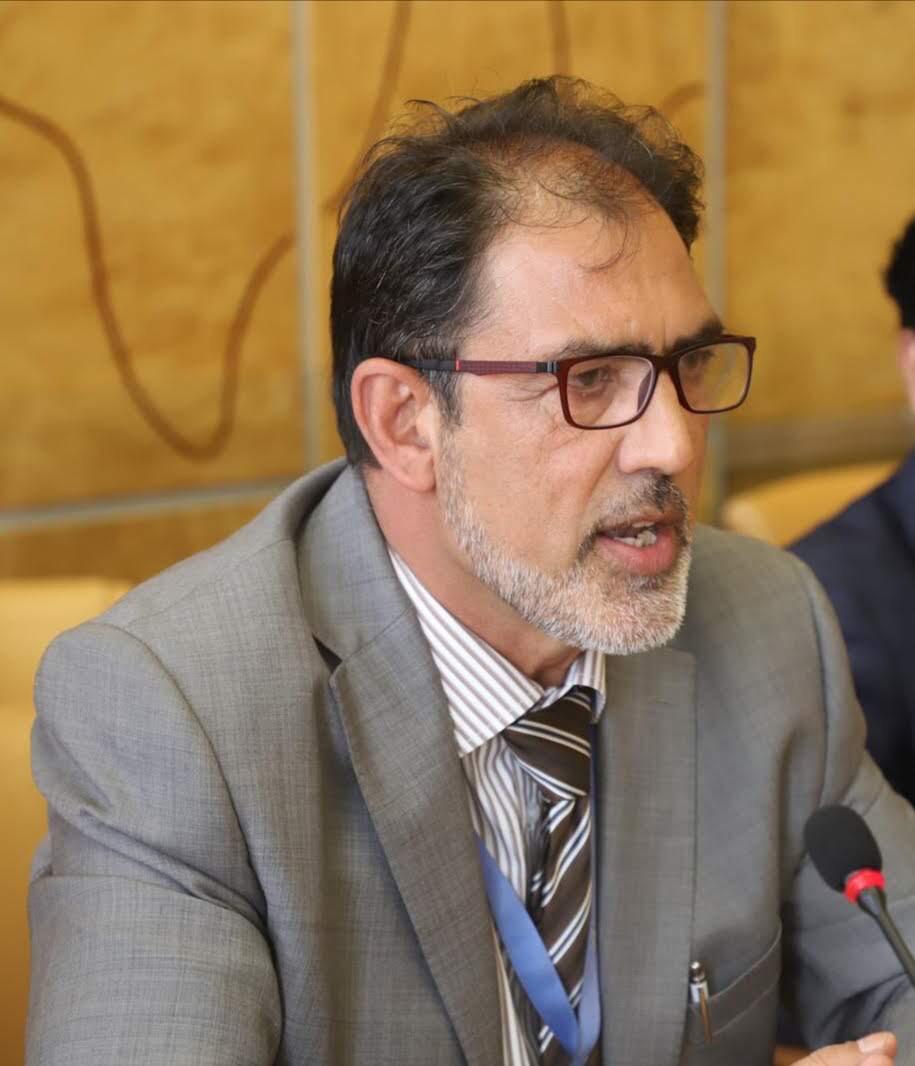
A significant focus during this period was the prolonged detention of Kashmiri human rights defender Khurram Parvez and journalist Irfan Mehraj. In June, a joint statement endorsed by 92 organizations and individuals called for Parvez’s immediate and unconditional release and highlighted concerns regarding his prolonged detention without trial. Following their release on bail in July, international organizations, including the World Organisation Against Torture and the International Federation of Journalists, continued to raise concerns over the criminalization of human rights work, press freedom, and the continuation of legal proceedings against them.
International media also drew renewed attention to longstanding human rights concerns in Kashmir. Coverage examined cases of enforced disappearance and the unresolved suffering of families searching for missing relatives. Reports revisited allegations concerning thousands of disappeared persons and unmarked graves, highlighting the continuing demands for truth, accountability and justice. Other reporting focused on restrictions on academic and intellectual freedom, particularly the auditing of books and educational resources for allegedly “anti-national” content. These developments raised wider concerns regarding censorship, state control over knowledge and the shrinking space for independent thought and expression.
The period also witnessed international discussion of Kashmir within broader regional and diplomatic developments. Media commentary examined the continuing international relevance of the Kashmir dispute despite India’s position that it is an internal matter. References to Jammu and Kashmir in diplomatic engagements, debates over the Indus Waters Treaty and the Kishanganga Hydroelectric Project, and discussions surrounding regional stability demonstrated that developments in Kashmir continue to have implications beyond the territory itself.
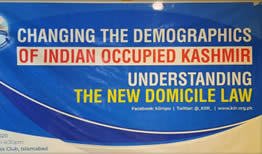
Several international reports and commentaries further examined the consequences of India’s policies since the revocation of Article 370 in August 2019. These accounts raised concerns about changes in land and residency laws, property acquisition, demographic change, increased surveillance, restrictions on movement and communications, and the use of stringent laws against journalists, activists and dissenting voices. Some international commentators described these developments through the framework of settler-colonialism, arguing that changes in the relationship between land, sovereignty and population require greater international scrutiny.
This report seeks to document and present these international observations in a consolidated manner. It juxtaposes official positions and narratives with concerns expressed by international human rights organizations, civil society groups and global media. The purpose is not to represent the position of any single institution but to provide a factual and source-based record of how developments in Kashmir were viewed and reported internationally between May and July 2026.
Given Kashmir’s unresolved and contested status, as well as its location between two nuclear-armed states, developments concerning human rights, civil liberties and political freedoms remain closely connected to wider questions of regional peace and stability. The material compiled in this report demonstrates that Kashmir continues to attract international attention and that concerns surrounding accountability, justice, freedom of expression and the protection of fundamental rights remain central to discussions on the region.
The report is intended to inform policymakers, researchers, human rights advocates and other stakeholders. By compiling international statements and media coverage from the period under review, it aims to contribute to a more informed understanding of the human rights situation in Kashmir and the continuing international engagement with the issue. The observations documented throughout the report underline the recurring need for accountability, protection of fundamental freedoms, respect for human rights and a peaceful resolution of the dispute in accordance with the rights and aspirations of the people of Jammu and Kashmir.
JOINT COMMUNICATION ON MINORITY ISSUES, FREEDOM OF OPINION AND EXPRESSION, AND FREEDOM OF RELIGION OR BELIEF
We have the honour to address you in our capacities as Special Rapporteur on minority issues; Special Rapporteur on the promotion and protection of the right to freedom of opinion and expression and Special Rapporteur on freedom of religion or belief, pursuant to Human Rights Council resolutions 52/5, 52/9 and 58/5.
In this connection, we would like to bring to the attention of your Excellency’s Government information we have received concerning the large-scale removal of millions of names from electoral rolls through a Special Intensive Revision (SIR) process led by the
the exclusion of ethnic, religious, and linguistic minorities from the National Register of Citizens (NRC) and electoral rolls were raised by Special Procedures’ mandate-holders on previous occasions (OL IND 13/2018 and OL IND 29/2018).
We thank your Excellency’s Government for the responses provided to the respective communications and for your continued engagement with United Nations Special Procedures mechanisms. We encourage your Excellency’s Government to carefully examine the allegations made in this and previous communications and to provide detailed responses to the mandate holders with a view to remedying any potential violations of the State’s obligations under international human rights law.

Election Commission of India (ECI), particularly affecting members of minority groups. This situation is of particular concern in the state of West Bengal, with regard to state assembly elections, which took place on 23 and 29 April 2026. Concerns regarding the National Register of Citizens and the Election Commission of India’s role in the exclusion of ethnic, religious, and linguistic minorities from the National Register of Citizens (NRC) and electoral rolls were raised by Special Procedures’ mandate-holders on previous occasions (OL IND 13/2018 and OL IND 29/2018).
We thank your Excellency’s Government for the responses provided to the respective communications and for your continued engagement with United Nations Special Procedures mechanisms. We encourage your Excellency’s Government to carefully examine the allegations made in this and previous communications and to provide detailed responses to the mandate holders with a view to remedying any potential violations of the State’s obligations under international human rights law.
A PUBLIC CALL TO END KHURRAM PARVEZ’ ARBITRARY DETENTION
On his 49th birthday, his fifth while arbitrarily detained, we, the undersigned organisations and individuals, stand in solidarity with human rights defender Khurram Parvez. We demand that the Indian authorities drop all charges against him, release him immediately and

unconditionally, and cease their campaign of judicial harassment. We have followed with concern Khurram Parvez’s detention on baseless charges since November 2021, and his continued detention without trial in Delhi’s Rohini Jail. Tomorrow, on his birthday, he will have spent 1,670 days in prison.
We remind the Indian authorities that three years ago, in June 2023, the UN Working Group on Arbitrary Detention (UNWGAD) determined that Khurram Parvez’s detention was arbitrary and called on the Indian authorities to release him. We are concerned that the Indian government, despite pledging to participate meaningfully with UN mechanisms as a member of the UN Human Rights Council, has not engaged with the UNWGAD in relation to Khurram’s detention.

We recognize that his detention and judicial harassment is happening in a context of longstanding, ongoing grave violations of human rights and fundamental freedoms in Jammu & Kashmir. We strongly condemn the Indian authorities’ widespread and normalized use of repressive counter-terrorism laws, such as the Unlawful Activities (Prevention) Act, under which Khurram Parvez is being targeted, to silence human rights defenders and dissenting voices.
We urge the government of India to immediately and unconditionally release Khurram Parvez. We also call on India’s international partners to publicly denounce Khurram Parvez’s detention and to demand that their Indian counterparts release him immediately and unconditionally. We remain steadfast in our solidarity with Khurram Parvez and will continue to call for his release as long as he remains detained.
INDIA: KHURRAM PARVEZ AND IRFAN MEHRAJ RELEASED ON BAIL
The Observatory recalls that in June 2023, the UN Working Group on Arbitrary Detention (UNWGAD), in its Opinion No. 8/2023, determined that Khurram Parvez’s detention was arbitrary and called on the Indian authorities to immediately and unconditionally release him.
Although the conditional release of the two defenders comes as a relief, after a prolonged period of arbitrary pre-trial detention, the harassment through legal means against them continues, in a context of longstanding and ongoing grave violations of human rights and fundamental freedoms in Jammu and Kashmir.
The Observatory calls on the Indian authorities to drop all charges against Khurram and Irfan, as they are part of politically motivated proceedings aimed at discrediting their legitimate work and the JKCCS. The Observatory calls on the Indian authorities to uphold their international human rights obligations, cease the criminalisation of human rights work, and guarantee protection from all acts of reprisals.
INDIA: KHURRAM PARVEZ AND IRFAN MEHRAJ RELEASED ON BAIL
“The IFJ calls on the Indian authorities to immediately release the three detained journalists and drop all charges against them. The state and national governments must uphold their obligations to protect and promote press freedom and ensure that journalists can work without fear of reprisal.”
On 22 July, journalist Irfan Mehraj was released on bail in New Delhi. He was initially granted bail by a lower court, but the NIA opposed this and demanded the suspension of his release. The Delhi High Court permitted his release on the condition that he remain in New Delhi and arrange his own accommodation. He still faces charges and the trial is ongoing.
FROM PAHALGAM TO GLOBAL DIPLOMACY: HOW A NARRATIVE BACKFIRED
Within India, the narrative surrounding Pahalgam began to face scrutiny. Political opposition and independent observers questioned whether the initial handling of the incident — from rapid blame attribution to military escalation — had delivered any tangible strategic benefit.
The developments of the past year highlight an important lesson in modern statecraft: narratives cannot substitute for evidence, and speed cannot replace credibility. In the information age, influence is not determined by who speaks first, but by who sustains trust over time.
A year after Pahalgam, the regional balance of perception appears altered. Pakistan has expanded its diplomatic engagement and reinforced its international partnerships, while India faces questions about the long-term impact of its decisions. The episode serves as a reminder that in geopolitics, narratives are powerful, but only when they are anchored in credibility.
KASHMIR, COMMUNALISM, AND THE COLLAPSE OF CREDIBILITY
A report by the Association for Protection of Civil Rights (APCR) documented 184 hate crimes across India between April 22 and May 8, 2025, with 106 of these incidents allegedly triggered by the Pahalgam attack. Eighty-four hate speeches, 39 assaults, 19 vandalism and 3 Murders are mentioned in the report. The reported incidents also include evictions, and social boycotts targeting Muslims and Kashmiris.
Here below are some examples: Kashmiri students and women were attacked in Chandigarh and Himachal Pradesh; Muslim vendors were assaulted in places like Mussorie, Uttarakhand; a Muslim man was killed in Agra, Uttar Pradesh by members of the Kshatriya Gau Raksha Dal, with a Hindu supremacist claiming it was in retaliation for the Pahalgam attack; a Muslim man was lynched to death over an alleged “Pak slogan” in Mangaluru, Karnataka; a third murder by lynching of a Muslim man by a Hindu mob was reported in Bokaro, Jharkhand; a Muslim boy was forced to urinate on a Pakistani flag in Aligarh, Uttar Pradesh; Hindu mobs, including Bajrang Dal members armed with hockey sticks and swords, were reported to have assaulted Muslim women, children, and men in Santacruz, Maharashtra, in one instance allegedly forcing a Muslim woman carrying her child to say “Jai Shree Ram” and threatening her with “dragging” her to Pakistan. A mazaar (Muslim shrine) was vandalized and an attempt was made to demolish it in Uttarakhand.
SOUTH ASIA’S NEW WATER CONFLICT IS OVER DATA, NOT DAMS
India placed the Indus Waters Treaty (IWT) in abeyance last year, attention naturally focused on the diplomatic and legal consequences of the decision. Yet the more consequential question may lie elsewhere: what happens when transparency begins to disappear from one of the world’s most successful transboundary water-sharing arrangements?
The answer can be found in the long-running controversy surrounding India’s Kishanganga Hydroelectric Project. For more than six decades, the Indus Waters Treaty has survived wars, military crises and recurring periods of hostility between India and Pakistan. Frequently cited as one of the world’s most durable water-sharing agreements, the treaty established a framework through which both countries managed competing interests over a river system vital to hundreds of millions of people.
Today, however, the challenge facing the treaty extends beyond water allocation itself. It concerns transparency, compliance and the growing strategic value of information in shared river basins. The controversy has acquired renewed significance following India’s decision to place the treaty in abeyance after the April 2025 Pahalgam attack.
KASHMIRI RIGHTS ACTIVIST WINS PARTIAL COURT VICTORY BUT REMAINS BEHIND BARS
The Delhi High Court grants bail to Khurram Parvez, who has been jailed for nearly five years in ‘terror funding’ cases.
Ironically, the book, along with another titled Great Personalities of Jammu and Kashmir – authored by Sushant Giri and published by a New Delhi-based outfit – was provided to public and school libraries in the region under a government-funded programme.
Get instant alerts and updates based on your interests. Be the first to know when big stories happen. Yes, keep me updated
But the BJP’s Sharma described their presence as an example of “academic jihad”, invoking a popular Islamophobic dog-whistle and arguing that such books were intended to incite unrest in Kashmir.
“These forces are once again trying to poison the minds of young people and children, pushing them back towards separatism and terrorism,” Sharma told reporters, demanding a ban on such books.
Police in Kashmir, controlled by a New Delhi-appointed administrator rather than by an elected government in the region, immediately swooped down on the publishers of the two books and arrested three people, charging them with “endangering the sovereignty, unity, and integrity” of India.
https://185.16.39.144/news/2026/7/19/why-is-india-vetting-books-in-kashmir-in-search-of-anti-national-content? cpo=aHR0cHM6Ly93d3cuYWxqYXplZXJhLmNvbQ
KASHMIRI RIGHTS ACTIVIST WINS PARTIAL COURT VICTORY BUT REMAINS BEHIND BARS
International rights groups have widely condemned Parvez’s arrest and continued imprisonment. His lawyer, Swati Khanna, said she hoped Parvez could be freed from jail soon if there was a “positive result” in the second case.
“We are hoping, in a month or two, he could be out,” she told reporters. The trial has not begun in either of the cases – an issue highlighted by international rights organisations, which say the process becomes the punishment for political prisoners in India who have to wait years behind bars before even facing trial.
The conviction rate in the counterterror law, the Unlawful Activities Prevention Act (UAPA), remains low at 5 percent nationally. It dips further, to less than 1 percent, when it comes to Indian-administered Kashmir. Prime Minister Narendra Modi’s Hindu nationalist government has been criticised for persecuting dissent and criminalising expression in Kashmir, the country’s only Muslim-majority region.
DECADES OF DENIAL: DEATH CERTIFICATE FOR DISAPPEARED REOPENS KASHMIR WOUNDS
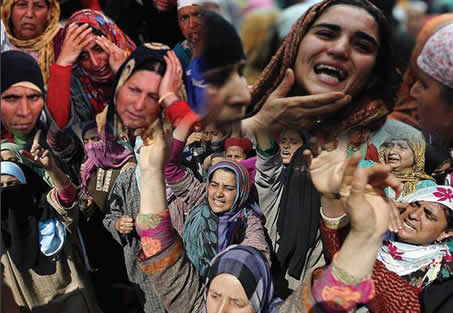
After years of searching and court battles, a judge declares what Junaid Rashid already believed: His father, Abdul Rashid Wani, was dead. The People’s Union for Democratic Rights, a civil liberties group based in New Delhi, said Wani’s judicial declaration of death “encapsulates the human rights story” in Kashmir since violence surged in 1989. It said Wani was just one case among many of “enforced disappearance”.
There could be as many as 8,000 disappeared people, according to the rights group Association of Parents of Disappeared Persons (APDP). Some of them, it said, were likely abducted by rebels. It mapped in 2009 what it said were 2,700 unmarked graves in remote mountain zones along the de facto border with Pakistan. It also quoted residents alleging they had buried mutilated bodies left by security forces. Kashmir’s State Human Rights Commission also examined the graves. In 2011, it found bodies buried at 38 locations identified by the APDP and said the government had identities for only 464 of the 2,730 bodies at the sites.
KASHMIR, PAKISTAN AND INDIA’S DIPLOMATIC DISCOMFORT
Indian authorities release the two men after years in prison although both remain under tight court-imposed restrictions. In 2023, the UN Working Group on Arbitrary Detention said Parvez’s arrest was an “act of reprisal for his human rights work, and an attempt to silence him and Kashmiri civil society as a whole”.
After their release, the Paris-based International Federation for Human Rights and the World Organisation Against Torture said the two were arrested on “trumped-up charges” and called on Indian authorities to drop the case, describing the proceedings as politically motivated. Journalists in Indian-administered Kashmir say they have faced harassment and arrests since Prime Minister Narendra Modi’s government annulled the region’s partial autonomy.
From 2019 to 2023, more than 3,600 people were arrested there under “antiterrorism” laws, more than half of whom remain in prison, according to government figures. Muslim-majority Kashmir has been divided between India and Pakistan since their independence from British rule in 1947. Both countries claim the territory in full. Rebel groups have fought the Indian government since 1989, demanding independence or a merger with Pakistan. The conflict has killed tens of thousands of people, mostly civilians.
Related Reports