Legalized Repression as Everyday Reality: A Human Rights Perspective on AFSPA, PSA, and UAPA in Indian-Occupied Kashmir
Legalized Repression as Everyday Reality: A Human Rights Perspective on AFSPA, PSA, and UAPA in Indian-Occupied Kashmir
Abstract
This work states the effects of militarization and draconian legal laws upon civilian life in Indian controlled Kashmir with an emphasis on the Armed Forces (Special Powers) Act (AFSPA, 1990), Public Safety Act (PSA, 1978), and Unlawful Activities (Prevention) Act (UAPA, 1967). Using a case-based study approach, the paper examines documented cases of human rights abuse such as the Kupwara Massacre, unmarked graves, and the mass detention using the PSA and UAPA. The data used were secondary to human rights reports, literature books, and confirmed media reports.
The results show that militarization and legal
instruments act in a synergetic manner insofar as the result of their
interaction is the building of a systemic situation of fear, repression, and
impunity. Civilians live under limited movement, arbitrary arrests, arbitrary
killings and civil and political rights are not exercised. The study also
presents weaknesses pertaining to accountability and how ineffective the
national and international measures are in safeguarding human rights. The
article combines jurisprudence with testimonial evidence presenting empirical
data on the structural and social cost of militarized governance in Kashmir and
the need to reform the law, judicial monitoring and specific interventions to
protect the rights of civilians.
Key words: AFSPA, PSA, UAPA, Human Rights Violations, Legalized Repression, Counter Terrorism Law,

1.
Introduction

Researcher: Mohammad Raza Illahi
1.1. Research Questions
The following questions will be taken up in this
study:
1. What benefit or impact has militarization through
AFSPA, PSA and UAPA had on the everyday lives of civilians in
Indian-administered Kashmir?
2. What do
the trends of human rights abuses involve in the context of Kupwara Massacre,
unmarked graves, mass detention?
3. What are
the connections between these violations and the rest of the international
human rights framework and mechanisms of accountability?
1.2.
Objectives
The
major goals of this study are:
·
To
discuss how militarization has affected the lives of the civilians in Kashmir.
·
To
record particular human right abuse in the form of case studies
·
To
examine the performance of the international legal structures and national
systems in avert abuses.
1.3. The importance of the Study
This study
would create awareness of fact-based analysis of state sponsored repression in
conflict regions. It will provide empirical information on the impacts of laws
such as AFSPA, PSA, and UAPA to policymakers, human rights agencies and
research scholars. The paper also leads in filling a gap in the literature by
correlating the law to observed crimes in the real world and identifying the
necessity to amend it and hold those responsible accountable (Schofield 2010).
3. Literature review
Scholars
have captured massive militarization of Indian-administered Kashmir. Bose
(2003) explains that the presence of Indian armed forces in the region has
produced one of the most extensive military establishments in the world and
this has seriously impacted civilian life. The Armed Forces (Special Powers)
Act (AFSPA), as an additional means of power, was mentioned as an effective
tool that gives soldiers the right to lethal force and to make arrests without
any warrants (Human Rights Watch 2022). Polarization has also been noted as
another factor that has continued to increase fear as well as mistrust
especially due to the normalization of military activities (Schofield 2010).
3.2. Legal Frameworks and
Human Rights Concerns
The
main tools used in India regarding legal control over dissent is the
equalization to the PSA and the UAPA. Under the provisions of SA, preventive
detention of up to two years is possible, frequently without the input of a
court and, according to UAPA, an excessively broad scope of activities is
criminalized, which allows prosecution of both political activists and
civilians (Amnesty International 2021). According to Zutshi (2004), such laws
institutionalize impunity of security forces at the expense of other existing legal
principles and more specifically the fundamental human rights guarantee within
Indian law as well as on international treaties.
3.3. Documented Human Rights
Violations
The reissuance of militarization
and repressive legislative laws is demonstrated by a series of case studies,
which show the actual impacts on them. Thus, the Kupwara District, in
particular, has observed numerous mass killings and suspicious killings
reportedly perpetrated by the security forces, however, with limited
responsibility (Human Rights Watch 2022). The finding of unexplained graves
throughout Kashmir, as stated by Amnesty International (2021), additionally
reproduces cases of organized extra-judicial activities. Investigations by Kaul
(2018) indicate that mass detentions based on PSA disproportionately target the
youth and political activists and is part of social and political oppression.
These findings confirm what has been found repeatedly in other literature: effects
of state mechanisms intended to counter insurgency, end up facilitating
systematic human rights violations.
3.4 Gaps in Existing
Literature
The
existing literature on Kashmir has focused on AFSPA, PSA and UAPA in sufficient
detail but there exist three major lacunae in the analysis of these laws.
First, most studies focus on these laws individually not taking into
consideration how they interrelate with one another as a legal system of
repression. Second, the literature tends to be event-oriented, so it records
massacres or detentions but not how these laws affect the daily activities of
Kashmiris. Third, limited articles consider the scope of human rights, so the
conflict between these laws and the international obligations of India remains
an unexplored area. This study fills these gaps by offering an integrated and
human rights-based discussion of the AFSPA, PSA and UAPA and how they normalize
the conditions of repression as a day to day aspect of life in
Indian-administered Kashmir.
In
this study, a qualitative research method is adopted since it is appropriate
when dealing with a complex social phenomenon like human rights violation and
militarization. Qualitative research can result in a great insight of
experience, behavior and institutional practices that are not quantifiable
(Creswell 2014). A case study approach is deployed to study particular deeds of
repression in the Indian-administered Kashmir, which permits a more intensive
study of the setting, the process, and the results. This comes as the existing
research on human rights highlights the fact that using contextualized approach
is relevant in deciphering the abuses conducted under the government
sanctioning of human rights (Bryman 2016).
1.
Kupwara Massacre:
Such incidences of mass killings have been reported by security agencies, which
are cases of extreme militarized violence (Human Rights Watch 2022).
2.
Unmarked Graves and Extrajudicial
Killings: Evidence of systematic abuse to human
rights by enforced disappearances and unmarked graves (Amnesty International
2021).
3.
Mass Detentions under PSA and
UAPA: An overview of the preventive
detentions of political activists as well as civilians, which are legal tools
of suppressing the dissent (Kaul 2018).
Such cases are selected on the basis of their
documented extreme forms, accessibility to credible sources, and related to
various aspects of repression that apply to the use of fatal force to claim
legal domination over civilian lives.
4.3. Data Collection
The sources
of data used on this research include:
·
A
report compiled by international human rights groups (Human Rights Watch,
Amnesty
·
International).
Literature books, peer reviewed journals (Bose 2003; Schofield 2010; Zutshi
2004).
·
Documented
media accounts of particular events as well as legal interpretations.
The sources
have also undergone a critical analysis with the aim of making sure of the
accuracy, credibility, and relevance to research questions. The juxtaposition
between the case studies and the document analysis provides a richer picture of
what the law is, as well as how it works out on the ground, of the scenario of
the people living in Kashmir.
4.4. Ethical
Considerations
This research relies
solely on publicly available data, ensuring that no direct interaction with
vulnerable populations occurs. All case studies are cited responsibly,
maintaining the integrity of sources and respecting the sensitivity of human
rights violations.
5.1. Militarization and Everyday
Repression
5.2. Kupwara Massacre
Large scale incidents of civilian carnage, in
the course of counterinsurgency operations, have taken place here in the
Kupwara district of north Kashmir. Security forces are also alleged to have
carried out operations that have resulted in extrajudicial killings and damages
to provided without little accountability (Human Rights Watch 2022). There is
evidence of whole families being affected and even up to date survivors have
reported psychological trauma and loss of livelihood. Such incidents are
illustrative of how military action, which has been legally authorized under
AFSPA, tends to end up in wanton violence that directly on civilians.
5.3. Unmarked Graves
and Extrajudicial Killings
The
unmarked graves that have been found all over Kashmir indicate that
extrajudicial killings are widespread. According to Amnesty International
(2021), hundreds of bodies, some of which allegedly were killed by the security
forces during the counterinsurgency operations, were buried without any
documentation. Information on the fate of individuals disappeared is often
unavailable to their families and this reflects on systematic violations of the
right to life and the right to due process. Such behaviors not only amount to
criminal offenses under international human rights law, but also results in
social trauma in the long-term, destroying trust between civilians and the
state.
5.4.Mass Detentions under
PSA and UAPA
The PSA in combination with the Unlawful Activities
(Prevention) Act (UAPA) have been extensively utilized in targeting political
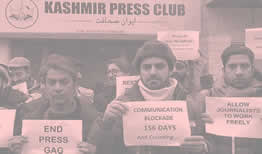
dissents, students, journalists and other civilians without trial (Kaul 2018).
Preventive detention in PSA can extend to two years and remedy is very limited.
UAPA laws enable the authorities to declare people as terrorists on broadly
defined actions, placing them in long-term imprisonments (Amnesty International
2021). All these laws result in total suppression of dissent and curtailment of
civil rights and this illustrates the link between laws and militaristic
supersession.
This discussion shows that militarization in Kashmir
is multi-dimensional both in the form of overt violence (Kupwara Massacre),
systemic suppression (unmarked graves), and the legal system (PSA and UAPA).
Combined, these processes contribute to the formation of a systemic climate of
fear and oppression that has a profound social, political and psychological
impact of imprisoning civilians. It has been argued that these activities
amount to a breach of domestic constitutional protections in addition to
international human rights laws, which underline the importance of accountability
and change (Schofield 2010).
The conclusions of the present study point to the severe and multidimensional contribution of militarization and legal repression to the civilians of Indian-administered Kashmir. This militarization as seen in terms of massive deployment of military persons and operational measures under AFSPA is a considerable restriction to the day to day activities. This state of affairs is true as portrayed in the literature since it encourages an atmosphere of fear and suspicion, restricts freedom of movement, access to education and engagement in civic activities (Bose 2003; Schofield 2010).
The present study supports these findings in showing that civilian experiences should not be viewed as collateral effects of counterinsurgency but rather as being often strategically targeted as part of state policies and practices. The scenario is evident in the case studies examined in this respect where Kupwara Massacre, unmarked graves, and mass detentions on orders of PSA and UAPA indicate the repression continuum that applies to both direct acts of lethal force as well as legal-institutional acts of control. Kupwara Massacre highlights the deadly effects of unrestrained military force, which is also supported by Human Rights Watch (2022) that reports the number of civilians killed due to the security operations.
The same could be said about unmarked graves as they are a representation of the institutional removal of responsibility, an aspect highlighted in Amnesty International (2021). Mass detention through the use of PSA and UAPA is another example of the blending of law and militarization where the legal tool works to censure criticism and legitimize the coercive arm of the state (Kaul 2018). When comparing these findings with the literature already available, a similarity of several findings and an extension to other discoveries will be seen. Historical-critical and political approaches have been made by scholars like Zutshi (2004) and Schofield (2010) to understand the conflict of Kashmir and the presence of the security forces in sustaining the powers of the state.
The present research goes beyond the rhetoric to evidence with its empirical/case-based approach the human cost of militarization and legal repression, highlighting the experiences of people, who, unfortunately, are the least represented in the academic literature. The integration of the analysis of law and case study reveals the structural aspect of violations of rights, which closes the gap between the provisions of the law and their practical application. These findings have implication on local and international systems of human rights. The use of AFSPA, PSA, and UAPA in a systematic manner indicate that a change is necessary in the form of legislation and judicial supervision that the provisions of security do not contravene the fundamental rights.
Moreover, international human rights bodies
should intervene in this interference more actively, because the established
system of justice has not helped to eliminate human rights violations. The
paper demonstrates the necessity of contextualized analysis on human rights in
conflict areas because militarization processes coupled with a legal framework
have a lifelong effect on the lives of civilians. To
conclude, it has been established that militarization and repressive legal
system are complementary factors that create an atmosphere of systematic
repression, which depreciates the human rights protection. These challenges
should be tackled with dual aims law reform that will reduce impunity and
putting additional measures in place to protect the lives and rights of
non-combatants.
7.Conclusion
8.Recommendations
Legal Reform: AFSPA, PSA, and UAPA are to be changed to have judicial checks and balances, open systems of review, and putting time constraints on preventive detention without any violation of international human rights law. 2. Accountability Measures: There should be independent investigations on alleged cases of human rights abuses such as extrajudicial killings and enforced disappearnce carried out in a transparent manner. 3. International Engagement: Human rights organization and international bodies are to ensure that they step up monitoring and advocacy so that these violations can be monitored and handled. 4. Civil Society Support:
The primary measures to help the victims and related families, such as psychological counseling, education, and legal aid, have to be prioritized. 5. Research and Documentation: Further empirical studies particularly on social and psychic representation of militarization is imperative in estimating epistempically guided policy recommendations. To sum up it is important to state that the problem of human rights violations in Kashmir may be resolved using a diversified approach, which includes legal reform, accountability, and securing civil liberties of people, their social and political rights. By combining legal analysis with case-specific documentation of the human cost of militarization, the paper would fill a gap in the advancement of knowledge by revealing new and important information, particularly to the policymakers, and highlighting the need to reform systems and mechanisms that violate both domestic and international human rights.
1.
References
·
Amnesty
International. 2021. India: Human Rights Violations in Jammu and Kashmir.
London: Amnesty International.
·
Bose,
Sumantra. 2003. Kashmir: Roots of Conflict, Paths to Peace. Cambridge:
Harvard University Press.
·
Bryman,
Alan. 2016. Social Research Methods. 5th ed. Oxford: Oxford University
Press.
·
Creswell,
John W. 2014. Research Design: Qualitative, Quantitative, and Mixed Methods
Approaches. 4th ed. Thousand Oaks, CA: SAGE Publications.
·
Human
Rights Watch. 2022. India: Kashmir Human Rights Update. New York:
Human Rights Watch.
·
Kaul,
Nitasha. 2018. The Politics of Detention in Kashmir: Youth, Security, and
Resistance. New Delhi: Routledge.
·
Schofield,
Victoria. 2010. Kashmir in Conflict: India, Pakistan and the Unfinished
War. London: I.B. Tauris.
·
Zutshi,
Chitralekha. 2004. Languages of Belonging: Islam, Regional Identity, and
the Making of Kashmir. New Delhi: Permanent Black.
Related Research Papers